
Structures and Systems
Supply Chain Management
Against a backdrop of an expansion in our business areas, ITOCHU’s supply chain has become wider and more complex. There is now a further need for risk management concerning human rights, labor and the environment in the procurement of raw materials, producing areas, intermediate distribution and regions of consumption in addition to in the processes directly managed by us. We pay particular attention to the on-site management of suppliers who account for a relatively high share of our purchases. We view our consideration and sense of responsibility for these areas as matters of great importance to be addressed with high priority.
ITOCHU has formulated the Sustainability Action Guidelines for Supply Chains, and by conducting annual sustainability surveys and reviews as described below, we strive to confirm consistency with the guidelines and prevent the occurrence of problems. Through annual sustainability surveys and engagement with suppliers, together with buyer training and internal communication tools, ITOCHU seeks to confirm consistency between the Sustainability Action Guidelines for Supply Chains and its procurement-related practices, and to identify issues that may require reconfirmation or follow-up. If we discover a problem, we aim for improvement through dialogue with the supplier concerned.
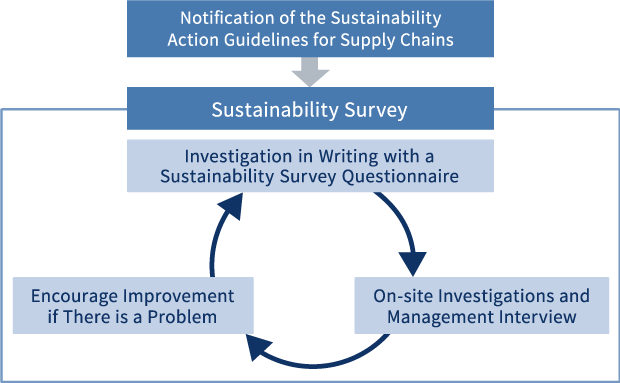
Sustainability Surveys
We have been conducting sustainability surveys since FY2008 to realize sustainable procurement and understand the actual conditions of suppliers. Each Division Company and applicable Group company selects important suppliers based on certain guidelines (e.g., high risk countries, products handled, industry sectors, and monetary value handled). The sales representatives of those Division Companies and representatives from overseas subsidiaries and operating companies then visit those suppliers to conduct interviews, in addition to a questionnaire format (sustainability checklist) with the seven core subjects of ISO26000 as essential survey items.
We conduct supply chain sustainability survey information seminar for employees who procure various products in a variety of countries ahead of the sustainability survey. We also provide training (buyer training) using the handbook to understand the Sustainability Action Guidelines for Supply Chains and ESG perspective that must be kept in mind in communication with suppliers. The contents of the questionnaire and handbook are reviewed annually to enhance the effectiveness of ESG risk identification and management.
Sustainability Survey Questionnaire
The Sustainability Survey Questionnaire is used to conduct supplier surveys on their management of relevant sustainability risks. The Checklist is based on the seven ISO26000 core topics (organizational governance, human rights, labor practices, environment, fair business practices, consumer issues, community involvement and development) and is supplemented by department and product specific issues that we identified as relevant to our business and by extension our suppliers (see table below for our list of supplementary topics). Furthermore, based on opinions provided by external subject matter experts, we have constructed the survey questionnaire to consist of 18 core items centered around human rights and labor and environmental topics particularly associated to high sustainability risks – these items are our priority in supplier engagements.
| Applicable Survey Criteria |
|
| Main Questions Common to All Division Companies |
|
| Procured Resource Type | Additional Survey Items |
| Paper, Wood-chips, Timber |
|
| Agricultural Crops |
|
| Meat Products |
|
| Natural Marine Products |
|
| Apparel |
|
| Palm Oil |
|
| Coffee Beans |
|
Sustainability Survey Handbook
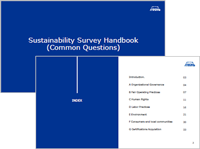
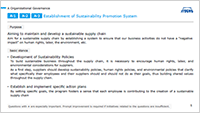
We have prepared a handbook on communication with suppliers. We are using this to inform our employees of how to communicate with suppliers. At the same time, we have set up a check system that enables employees to understand concretely the management situation in terms of the environment, human rights, labor practices and corruption prevention in important suppliers to give advice on making improvements. We will continue to conduct surveys and communicate with suppliers in the future to improve the awareness of our employees and to seek understanding and implementation from our suppliers.
Example Excerpt from the Handbook
Prohibition on Forced Labor

Purpose: Prohibition of forced labor
All forms of forced labor against the will of the individual are gross violations of human rights and are prohibited by international conventions such as those of the ILO.
Items to be checked
- Is all forced labor prohibited, including bonded or detained labor, involuntary or exploitative prison labor, slavery or human trafficking, and the admission of workers transferred by threat, force, coercion, abduction, or fraud?
- Are the original passports and IDs of foreign workers kept in custody, restrictions on going out and returning home in the employment contract, or loans of money at the time of signing the contract?
FY2025 Sustainability Surveys
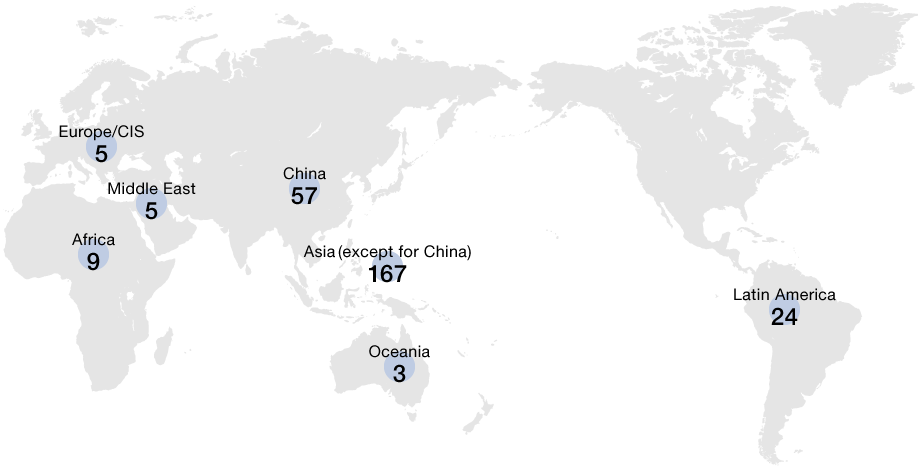
We conducted surveys on a total of 324 companies in FY2025. We did not discover any serious problems requiring an immediate response from those results. For business partners where concerns were identified during the surveys, we conducted 100% follow-up investigations and confirmed that prompt corrective actions and countermeasures were implemented by these partners. Going forward, we will continue to seek the understanding of our business partners regarding our approach and maintain ongoing communication with them.
In the last three years, the surveys have covered 59% of our business partners that meet our survey criteria.
| All | ||||||||
| Textile Company | Machinery Company | Metals & Minerals Company | Energy & Chemicals Company | Food Company | General Products & Realty Company | ICT & Financial Business Company | ||
| FY2025 | 324 | 79 | 54 | 14 | 31 | 106 | 38 | 2 |
| FY2024 | 275 | 75 | 9 | 14 | 31 | 106 | 38 | 2 |
| FY2023 | 305 | 74 | 8 | 20 | 31 | 104 | 65 | 3 |
| FY2022 | 320 | 105 | 9 | 20 | 31 | 104 | 48 | 3 |
| FY2021 | 288 | 65 | 9 | 20 | 31 | 107 | 53 | 3 |
The Sustainability Management Division also visits and surveys important suppliers together with external experts as necessary.
| Procured Resource Type | FY2023 | FY2024 | FY2025 |
| Paper, Wood-chips, Timber, Timber Products | 52 | 32 | 14 |
| Agricultural Crops | 31 | 31 | 31 |
| Meat Products | 13 | 13 | 10 |
| Natural Marine Products | 29 | 28 | 14 |
| Apparel | 60 | 75 | 43 |
| Palm Oil | 8 | 8 | 7 |
| Coffee Beans | 23 | 26 | 8 |
Regional Breakdown of Number of Suppliers Surveyed
Human Rights Audits in the Poultry Industry in Thailand
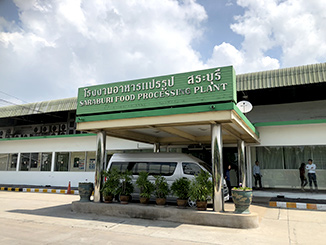
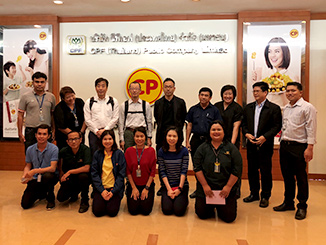
Inspection of the CPF Saraburi Factory
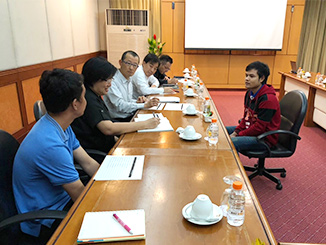
We conducted a human rights audit targeting foreign workers in the Saraburi Factory (a chicken meat processed product factory) of Charoen Pokphand Foods Public Company Limited (CPF) — one of the main suppliers of the Food Company — accompanied by external auditors.
Recent years have seen an increase in cases where Japanese companies with Thai firms in their supply chain have been warned by NGO groups about human rights violations of foreign workers in the livestock and fishing industries in Thailand. We checked the factory for human rights risks in our supply chain through this audit.
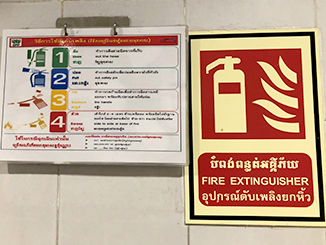
This factory (slaughterhouse and food processing site) employs 1,300 Cambodians — equivalent to approximately 30% of its workers. That makes them an important part of the factory’s labor force. We checked a number of items in this audit. These included the extent of signage in Cambodian in facilities in the factory, a check of the evacuation routes, the attendance management situation, and the personal storage situation of passports and work permits. In addition, we also randomly chose some Cambodian employees actually working there and interviewed them about their actual working conditions.
This audit did not find any violations of the human rights of foreign workers, and reaffirmed there is sufficient consideration for human rights and the proactive approach CPF takes toward sustainability.
CPF has developed a safe working environment for its foreign workers.
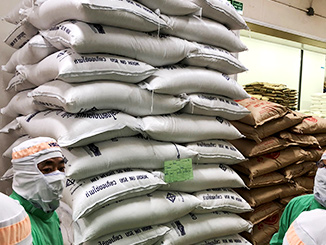

Regular Visits and Surveys of Food Processing Factories
The Food Company has been regularly visiting and surveying the food processing factories of its overseas suppliers since FY2011 in regards to imported foods under the initiative of the Food Safety and Compliance Management Office. In FY2025, we surveyed 391 overseas suppliers and inspected their food safety management system. We established a China Food Safety Management Team in Beijing in January 2015. With this, we have set up a structure to be able to audit our Chinese suppliers. We conducted regular audits and follow-up audits on 37 companies in FY2025.. Please refer to Responsibilities to Customers to learn about our initiatives in detail.
Third-party Sustainability Audits of Ready-made Meal Manufacturers
Many foreign employees provide an important part of the workforce at factories to which FamilyMart, a group company, outsources manufacturing for ready-made meals.
Accordingly, in order to ensure a better work environment for a diverse workforce, FamilyMart conducts a self-assessment questionnaire (SAQ) for business partners involved in the distribution of FamilyMart products, consisting of approximately 200 items to evaluate whether employee safety, health management, and other aspects are being properly addressed. Additionally, in FY2025, FamilyMart conducted third-party audits of 20 factories, including raw material manufacturers. FamilyMart inspected compliance with human rights, labor, safety and health, environmental standards, and confirmed that there were no significant issues in each factory. FamilyMart will continue to take action to build a sustainable supply chain in collaboration with all its business partners.
Response to Suppliers in Violation of Our Policy
When we have confirmed a case in which there has been a violation of the intent of any of our environmental or social policies, we request corrective action from the applicable supplier. Together with this, we conduct an on-site investigation to give guidance and improvement support as necessary.
In the FY2025 survey, the Sustainability Management Division carefully examined the answers from suppliers to key questions including the prohibition of child labor, the prohibition of forced labor and the payment of living wages, and identified issues that are necessary to share and to reconfirm with suppliers. As a result of this survey, the Sustainability Management Division requested the business departments in charge of the supplier to reconfirm the 39 extracted companies. The department in charge explained and shared the reconfirmation of these issues with the suppliers and conducted a detailed survey of the suppliers’ responses to them.
As a result, it was determined that the reconfirmed issues were being addressed by each supplier, and no requests for corrective actions were made to suppliers in FY2025. Through this survey, suppliers actively report issues and engage with the business department involved. When a problem is identified, suppliers are requested to take corrective actions, thereby encouraging them to make efforts to correct the issue.
If it is judged that correction is difficult despite ongoing requests, we will reconsider our business with the relevant supplier, including regarding the continuation of the contract.
| Key Questions | Request of Reconfirmation and Request of Corrective Action | |||
| Questions | Checking Contents | Number of Reconfirmation | % (324 suppliers) | Number of Corrective Action |
| Clarifying Responsibilities for Sustainability | The management team is responsible for sustainability, with a clear implementation system in place. | 1 | 0.31% | - |
| Whistleblowing System | A whistleblowing system is in place with documented measures ensuring no disadvantage to whistleblowers. | 5 | 1.54% | - |
| Fair Operating Practices: Policies and System | Policies and procedures to prevent corruption and misconduct are established, and monitoring is conducted. | 2 | 0.62% | - |
| Information Security | Information security policies are established and communicated to all employees. | 1 | 0.31% | - |
| Secondary Supplier | A sustainable procurement policy is established, and suppliers are requested to cooperate in sustainability-conscious business activities. | 18 | 5.56% | - |
| Prohibition of Child Labor | The minimum age for employment is clearly defined according to ILO standards and local laws, and age is verified by official documents at the time of hiring. | 1 | 0.31% | - |
| Prohibition of Forced Labor | A policy prohibiting forced labor is established, ensuring that practices such as taking passports or master copies of IDs, or setting restrictions on leaving or returning to their home country in employment contracts, are not implemented at the time of hiring. | 1 | 0.31% | - |
| Prohibition of Harassment | The prohibition of harassment is documented and communicated to all employees, and checks are conducted to confirm whether harassment actually occurs. | 0 | 0.0% | - |
| Right to Organize and Bargain Collectively | The right of employees to organize and bargain collectively is recognized, and opportunities to communicate with management on improving the working environment are available at least once per year. | 0 | 0.0% | - |
| Prohibition of Discrimination | A policy has been established and disclosed that prohibits discrimination based on gender, race, religion, etc., in employment and work opportunities. | 1 | 0.31% | - |
| Payment of Living Wage | Wages paid are above the statutory minimum, aligning with regional standards and job responsibilities, with no unjust reductions. | 0 | 0.0% | - |
| Working Hours | Working hours are appropriately managed in compliance with the country’s statutory limits, with at least one day off provided per week. | 0 | 0.0% | - |
| Safety and Health | Occupational health and safety risks are identified, addressed with appropriate measures, and regularly reviewed. Measures are also in place to support employee health, including mental health. | 0 | 0.0% | - |
| Hygienic Ancillary Facilities | All facilities, including restrooms, dormitories, and cafeterias, are maintained hygienically, with no citations from local authorities in over five years. | 4 | 1.23% | - |
| Environmental Regulations | Applicable environmental laws and regulations are listed, with their requirements reviewed and communicated at least annually. | 5 | 1.54% | - |
| Treatment of Waste | A waste management system compliant with local regulations is established and is reviewed and communicated at least annually. | 4 | 1.23% | - |
| Environmental Compliance | Local environmental regulations, including emissions and wastewater, are managed under stricter standards than required, with no violation notices or directives received from authorities in the past three years. | 0 | 0.0% | - |
| Explanation to Local Residents | When expanding farmland or factory sites, potential impacts on local residents are assessed in advance, with explanations provided and a contact point established for inquiries. | 0 | 0.0% | - |
| Total Number of Suppliers | 39 | 12.04% | - | |
Business Investment Management
The business activities of companies in which we invest must recognize and deal with their possible impact on the environment and society. To that end, we strive to understand ESG risks and work on preventative activities. We perform risk assessments on ESG in general through the utilization of a checklist and visits and surveys to formulate the necessary measures. These are continuously reviewed and improved in the framework of our environmental management system.
ESG Risk Assessment for New Business Investment Projects
It is compulsory in new business investment projects for the division making the application to use the ESG Checklist for Investments to evaluate the project in advance (perform due diligence). The division making the application looks at whether policies and structures have been established from the perspective of ESG. It also looks for the risk of a significant adverse effect on the environment, violation of laws and ordinances, and complaints from stakeholders. This checklist consists of check items that include elements of the seven core subjects* in ISO26000 — the CSR international guidelines.
The division making the application also then refers to review opinions based on risk analysis from relevant functional divisions (management divisions). If there are any concerns, it requests additional due diligence from external specialist organizations for matters requiring a professional point of view. The project is then only undertaken upon confirming that there are no problems in those results.
- Organizational governance, human rights, labor practices, the environment, fair operating practices, consumer issues, and community involvement and development
ESG Risk Assessment for the Existing Business (Group Company Fact-finding Investigations)
We have continued to conduct on-site visits and surveys in group companies since 2001 to prevent environmental pollution and risk assessment of labor practice. We have conducted investigations into a total of 307 offices in the world as of the end of March 2026.
These investigations inspect the factory and warehouse facilities, the situation of drainage to rivers, the environmental law and regulation compliance situation, labor practice, labor safety and human rights, and communication with the local community in addition to holding a question and answer session with management. We identify problems or demonstrate preventative measures. We then check to see whether the situation has been corrected.
Visit and Survey Report: DOLE PHILIPPINES Fact-finding Investigation
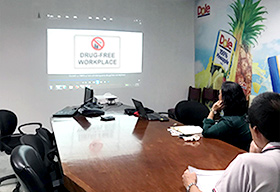
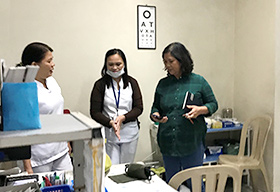
We visited and surveyed DOLE PHILIPPINES, a company which produces banana, pineapple and other fresh fruits and manufactures canned fruit in the Philippines, in January 2020. We performed a detailed check concerning the environment and labor safety related risk management and legal compliance situation (e.g., soil pollution, waste, chemical substance management and safety measures) based on the findings of external experts well-versed in the local laws and regulations. We confirmed that these matters are being appropriately managed. In addition, we confirmed that the company is proactively working on activities that contribute to society and the environment (e.g., biomass boiler on its premises and donations to local schools).